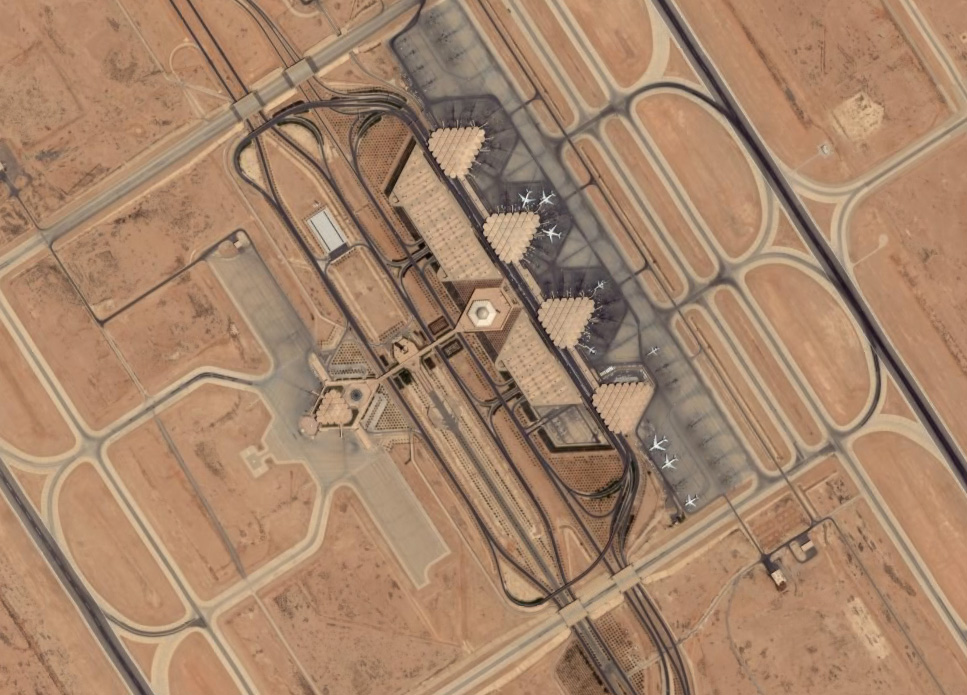
A missile attack on King Khalid International Airport in Riyadh on Saturday killed 12 people and injured 309 others, Saudi Arabia’s General Authority of Civil Aviation said early Sunday.
Missiles struck the airport’s passenger facilities directly, hitting Terminals 3 and 4, according to reporting by the Wall Street Journal. Saudi officials said parts of the roof fell on people inside, and several of the injured were in critical condition. Authorities ordered a full evacuation, suspended all operations and diverted incoming flights.
The aviation authority said four Saudi citizens were among those killed. The other victims included two Bangladeshis and one national each from the United States, Egypt, Jordan, Syria, the Palestinian territories and Sudan. The New York Times called it the deadliest attack in a Gulf Arab country since the US-Israeli war with Iran began in February. Full details from The Media Line.
A widening air campaign
Saturday’s strike was at least the third attack on the airport within a week, according to updated reporting. An earlier attack on October 7 killed one person and wounded eight, and assaults two days later killed three Saudi citizens, including a Saudia airline pilot, and damaged a national-carrier aircraft.
Houthi officials have acknowledged previous strikes on the airport. A senior Houthi official told the New York Times that Saturday’s attack was carried out in retaliation for Saudi strikes, including on civilian infrastructure in Yemen. As of Monday, the Houthis had declared Saudi airspace a military operations zone and warned international airlines to stay away, according to travel-industry reports. The region’s conflicts are escalating on multiple fronts.
What to watch
Nearly 1,500 flights have been cancelled across the kingdom, travel reports said on Monday, with Riyadh alone cancelling more than 430 flights. The US mission in Saudi Arabia and Canada’s embassy in Riyadh both urged citizens to avoid the airport area. India has condemned the attack.
Claims by both sides have been difficult to independently verify, with access for journalists limited and the situation moving rapidly. What happens next — whether flights resume, how airlines reroute, and how governments respond — will shape regional aviation and security in the days ahead. Energy markets are already feeling the strain of the wider regional conflict.