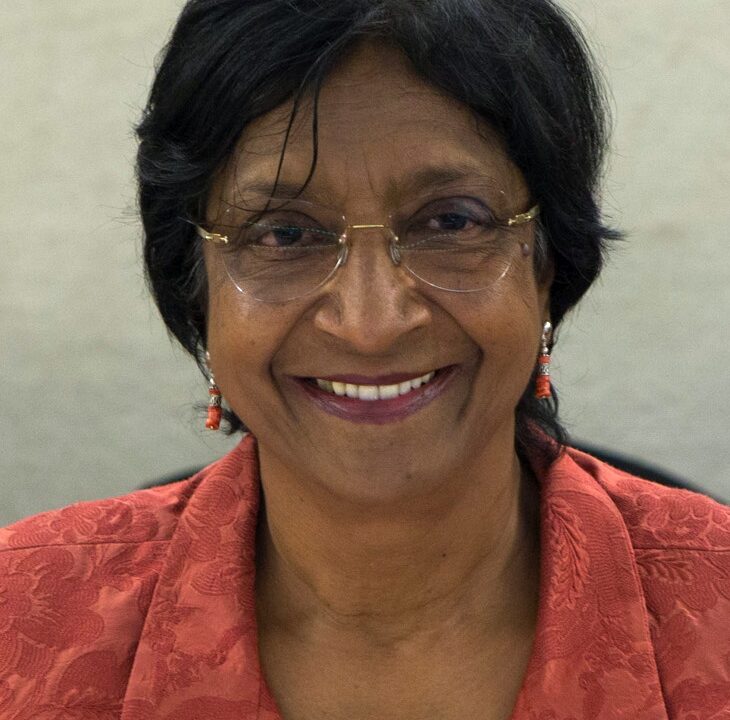
Days after being named the 2026 Nobel Peace Prize laureate, South African jurist Navi Pillay used her first major public appearance to condemn US sanctions against the International Criminal Court as “unheard of” and “unacceptable” — escalating a confrontation between Washington and the institutions of international law that the prize was meant to celebrate.
Speaking via video link from Nuremberg, Germany, at an event hosted by the Nobel Peace Center in Oslo on Saturday, the 85-year-old former UN human rights chief warned that the measures threaten judicial independence and deepen uncertainty over the future of international justice. Pillay, who once served as a judge on the ICC, dedicated her prize to the “survivors of international crimes” — and could not resist a joke at her most famous critic’s expense: “If you clap a little louder, I may share this prize with Trump,” she told the laughing audience.
Sanctions hours after the announcement
Hours after the Norwegian Nobel Committee announced Pillay’s award on October 9, the Trump administration unveiled institution-wide financial sanctions against the ICC. US Secretary of State Marco Rubio said the measures would prohibit transactions with a “rogue court,” extending a campaign against the tribunal over its arrest warrants for Israeli leaders. The ICC rejected the sanctions as an attack on international law; UN Secretary-General António Guterres called the American decision “a serious blow to our collective pursuit of international criminal justice.”
Pillay’s selection drew fury in Washington and Tel Aviv. At a rally in Syracuse, New York, President Trump — who has long coveted the prize himself — called the decision “a disgraceful and embarrassing decision” and an “indelible stain on the country of Norway,” saying he had “never heard of” Pillay. Israeli Prime Minister Benjamin Netanyahu said the committee had “lost its moral compass.” Pillay chaired the UN commission of inquiry that concluded in a 2025 report that Israel’s actions in Gaza amounted to genocide, a finding Israel rejects.
A lifetime defending the law
The committee honored Pillay for a career stretching from defending anti-apartheid activists in Durban — where she opened the first law practice by a non-white woman in Natal province in 1967 — to landmark judgments at the Rwanda tribunal, where she helped establish that rape and sexual violence can constitute genocide. She served as UN High Commissioner for Human Rights from 2008 to 2014.
The prize has thus become a stress test for the very order it honors. As regional conflicts redraw the Middle East and institutions strain, Pillay’s warning from Nuremberg — the birthplace of modern international justice — carries a deliberate weight. Read the laureate’s remarks via PressTV and The National.