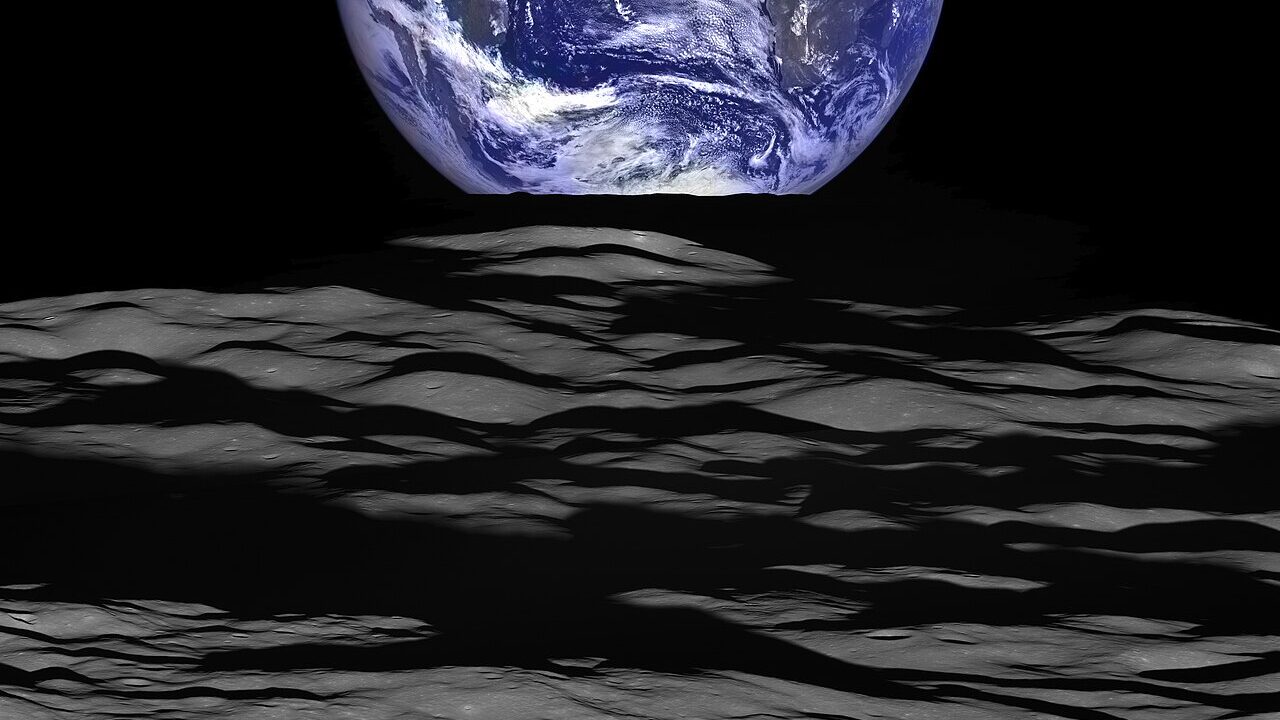
A fresh lunar crater 728 feet across and 141 feet deep — wide as two football fields and deep enough to stack three school buses — has been identified in Lunar Reconnaissance Orbiter images taken years apart, scientists report in Science Advances. Named McGetchin for pioneering lunar scientist Tom McGetchin, the crater formed when an object the size of a three-to-six-story building struck the Moon's eastern edge within the orbiter's observing lifetime.
The discovery began with a global map review, when a researcher noticed an unusual bright spot ringed by a dark halo — the signature of fresh ejecta disturbing older surface. Systematic comparison of before-and-after imagery has now catalogued at least 1,000 new impact craters during the orbiter's mission, alongside around 100,000 smaller surface changes from secondary debris, making the Moon's present-day impact rate a measured quantity rather than an estimate.
Impacts of McGetchin's scale are uncommon, occurring perhaps once a century or longer, the study notes. Measuring them matters beyond lunar geology. The crater record calibrates the impact flux that Earth shares, dates young lunar surfaces by their crater density, and tells mission planners how often hardware on the surface can expect a consequential strike nearby.
There is also a quiet lesson in where the crater hid: in archived data, found by re-examining a map rather than by a new instrument. Long-lived orbiters produce archives whose value compounds as comparison baselines lengthen, which is an argument for data stewardship that budget debates rarely reward and discoveries like this one reliably vindicate.
Express News Bulletin attributes the dimensions, naming and frequency assessment to the published study as reported. The orbiter imagery and the study's supplementary comparisons are the primary record for readers who want to inspect the bright spot and its halo themselves.
For Artemis-era planners, the catalogue behind this single crater is the operative product. Landing zones, surface habitats and parked hardware all carry impact risk that only a measured rate can price; a century-scale event rate, confirmed by direct observation rather than extrapolation, belongs in those calculations. The Moon keeps its own incident log in fresh craters, and the orbiter, still returning comparisons after more than a decade, has become its most reliable reader.